
SHARE
What is ATPL Meteorology?
What is ATPL Meteorology? An Introduction

Welcome to our series introducing you to all the theory subjects pilots study during the academic phase of initial pilot training, otherwise known as ‘ATPL ground school’.
(To find out more about becoming a pilot, check out this blog post.)
So, what is ATPL Meteorology all about?
ATPL Meteorology is the scientific study of the Earth’s atmosphere, climate and weather.
This subject provides the foundational knowledge to understand how atmospheric conditions directly impact flight operations.
What do student pilots learn in ATPL Meteorology?
Meteorology teaches you about the fundamental principles of the atmosphere and how to apply them in a flight environment. You’ll gain a deep understanding of:
- The atmosphere: Its composition, pressure, temperature, density, and humidity.
- Global and local weather: The forces behind global climatology, regional weather systems and local weather patterns.
- Threats: Key hazards like icing, turbulence, and windshear.
- Weather information: How to interpret met reports and forecasts, and how to apply them to inform your decision-making.

Why pilots study meteorology
Pilots must have good knowledge of climatology and weather patterns. This skill, along with the ability to correctly apply airport weather information, is vital for several reasons:
- Flight planning & decisions: Every pilot on every flight must consider and plan for the expected weather conditions. This informs your flight planning, choice of alternates, and fuel decisions.
- Takeoff & landing: The wind and visibility conditions determine which runways will be in use, what type of approach you can fly, and which arrivals and departures are being used.
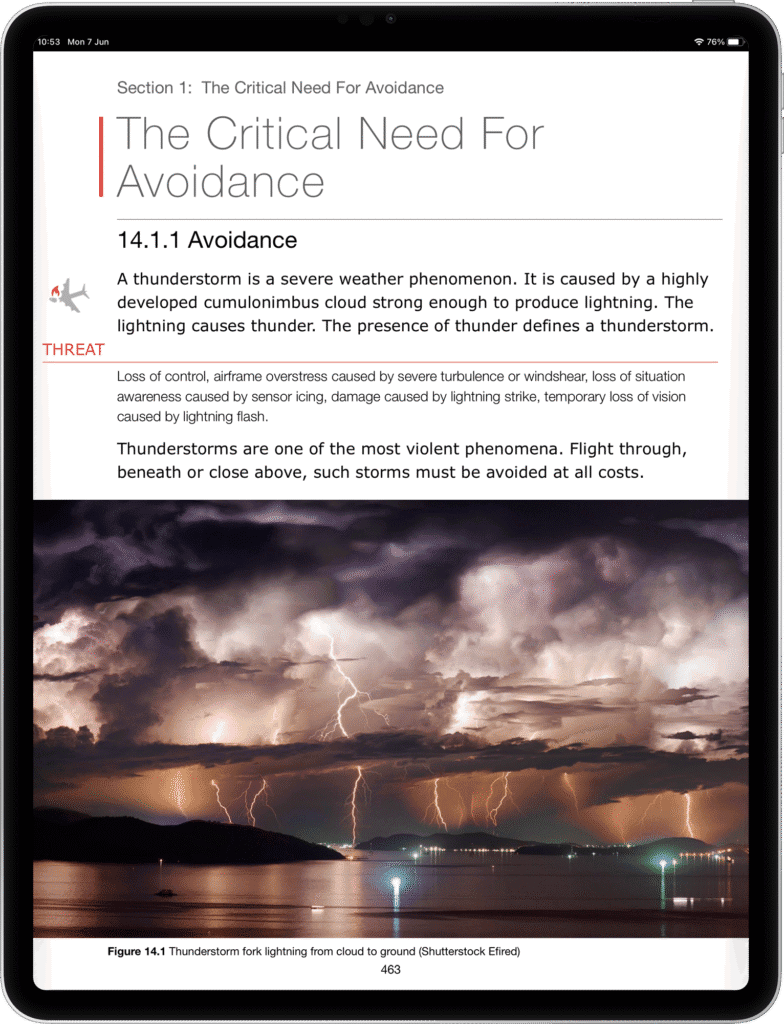
- Threat avoidance: You’ll learn how to identify weather-related threats associated with thunderstorms, icing, and turbulence. This allows you to proactively avoid them, ensuring a safe and comfortable ride for you and your passengers.
- Situational awareness: Understanding and applying weather information enhances your situational awareness and helps you optimise your decision-making throughout the flight.
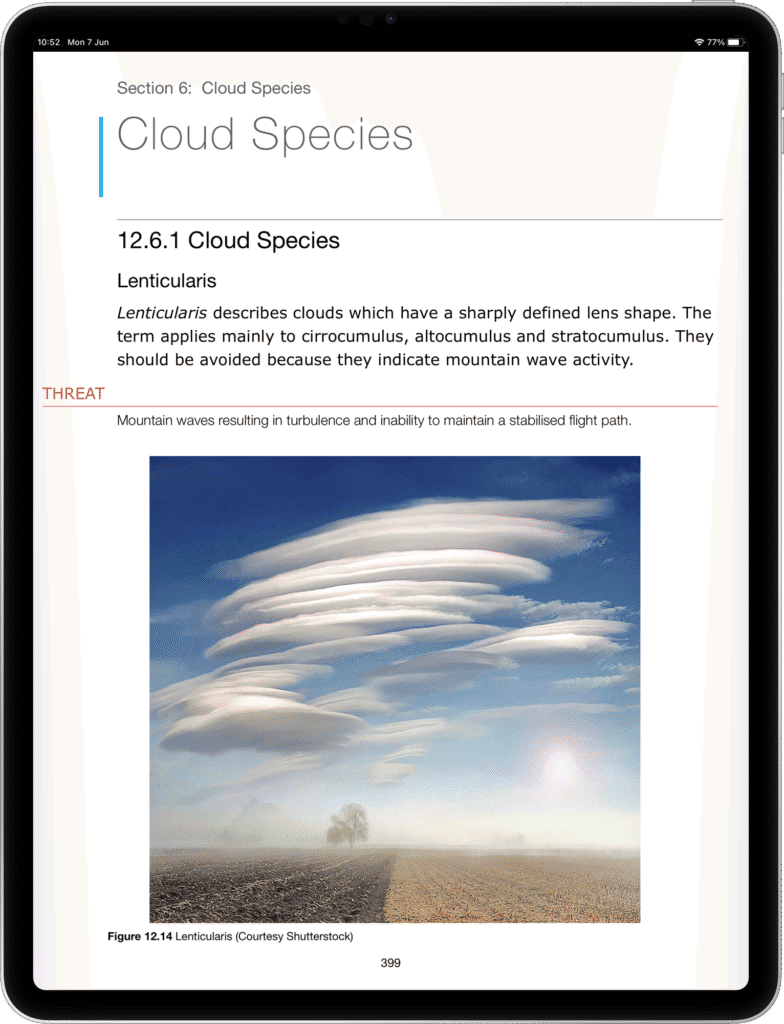
EASA/CAA ATPL Meteorology Exam
- Number of Questions: 84
- Exam Duration: 2 hours
- Pass Mark: 75%
The Padpilot ATPL Meteorology book is available now on any device as an individual edition, or as part of a complete set of ATPL books.
Fly through the ATPL exams and prepare properly for your future airline career. Padpilot books are used by most leading pilot training academies worldwide. They’re thorough, interactive and make complex information easy to learn and retain.
Purchase a book subscription below.
(Check with your ATO before subscribing, as some Padpilot partner schools already include our materials in your course package).
Back to basics: what is ATPL Theory?
Studying ATPL theory is the academic part of gaining your commercial pilot licence. (You’ll do more ground school later, as part of airline type training).
Every trainee commercial pilot needs to pass the 13 ATPL theory exams. Gaining a strong understanding of ATPL theoretical knowledge is the foundation on which your commercial flying is built. It’s worth doing properly!
If you choose an integrated commercial pilot training course you’re usually in ground school for the first 6-9 months of your course as you build your theoretical knowledge and prepare for the ATPL theory exams. Or, as modular student, you’ll study ATPL theory once you have a Private Pilot Licence. You can study full time or part time. Some pilot training organisations offer a stand-alone full time ground school course for modular student pilots and some offer distance learning, which is largely self study. Different training pathways suit different budgets and timeframes.
If you’re interested in training to become an airline pilot, visit some flight schools in person and ask lots of questions. Search for a Padpilot partner school here.
EASA/CAA ATPL theory exam subjects
Whether you study for the ATPL theory exams full time, part time, distance learning or in person, the exams you’ll take are the same.
And once you’ve successfully completed all of them, you’ll move onto your commercial flying training.
Find out more about each subject here:
